
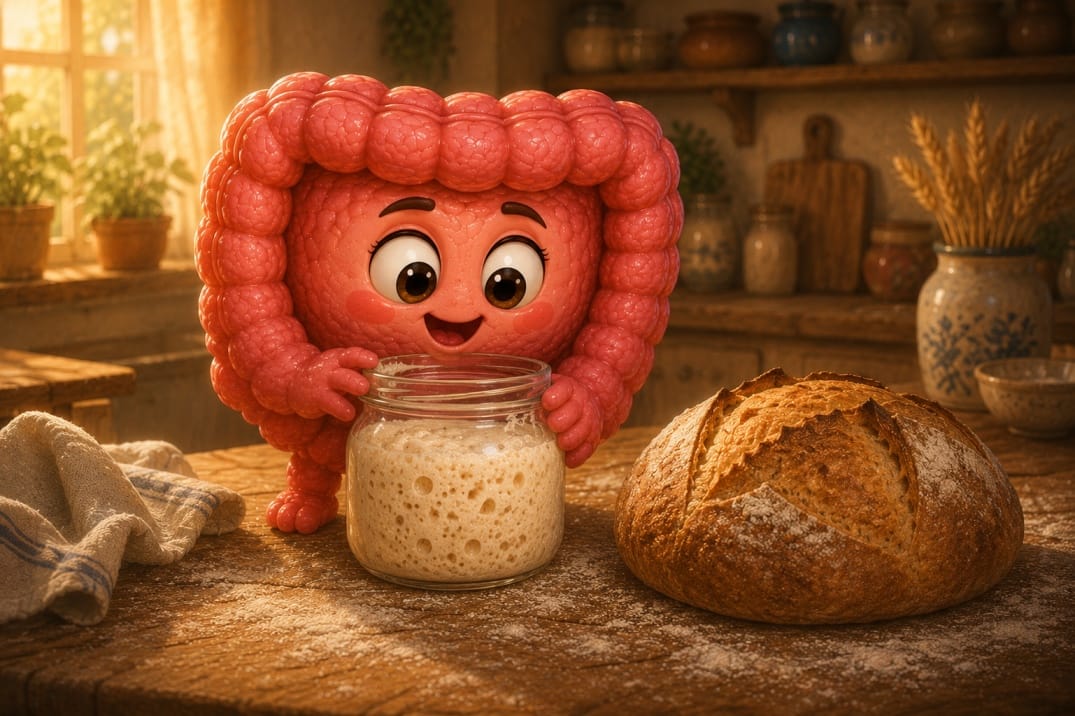
Every sourdough starter is unique. One gives a pronounced sour crust, another a soft and friendly loaf. Here's an overview of a few tried-and-tested traditional cultures and how to keep them alive.
Anyone who likes to bake their own sourdough bread knows that the starter determines everything. A good, natural sourdough culture gives not just rise, but also flavour, crust and shelf life. Traditional starters are living cultures of wild yeasts and lactic acid bacteria, and each culture has its own character, built up by the place and the years in which it grew.
Sourdough starters come in two forms. A dried starter needs a little more attention before it's fully active again, but it's handy if you don't need to bake straight away. A fresh starter is ready to use and already active. Whichever you choose, it comes down to patience: to build up a culture you have to feed it for a few days before it's up to strength.
Ischia: bold and pronounced
If you like a good and sour sourdough, Ischia is for you. This Italian starter comes from the island of Ischia in the Gulf of Naples. It rises well and is easy to care for. Its pronounced sourness makes it perfect for hearty loaves, for example under a toastie or with pastrami. Weekly feeding gives the best results.
Camaldoli: mild and reliable
This Italian starter comes from Camaldoli and is the ideal base for pizza. You'll appreciate its mild, pleasant flavour, and it makes excellent Italian bread. Camaldoli is a trouble-free, reliable riser, even for anyone just starting out with sourdough.
San Francisco sourdough: the classic
The San Francisco starter is world-famous for its characteristic, slightly sour flavour that comes from the naturally present lactic acid bacteria. It's the culture many bakers are after, and with good care it stays active for months, even years.
How to care for a sourdough starter
A sourdough is a living organism that needs food and rest. The basics:
- Feed the starter regularly with flour and water, preferably on a fixed rhythm.
- Keep it at room temperature if you bake often, or in the fridge with less frequent feeding if you're resting it for a while.
- A layer of liquid on top is normal: stir it in or pour it off before you feed.
- Always keep a small spare portion, so you can restart if something goes wrong.
With the right care, a good sourdough starter lasts a lifetime. Some bakers still bake with cultures that are generations old.
Is sourdough good for your gut?
Whether sourdough suits you too varies from person to person. Because of the long proving time, the bacteria break down some of the FODMAPs and gluten, which is why many people with a sensitive gut tolerate it better than ordinary bread. Our guide to fermented foods and your gut flora covers what to look out for when working out whether it's right for you.
Would you like our guidance in recovering from your gut symptoms? Apply for an intro call. The call lasts 30 minutes: we look at where you stand, what you've tried, and whether our guidance is a good fit. You'll always take something away from it.