Does your gut react to almost everything you eat? Do you often have bloating, fatigue or loose stools without knowing why?
See the optionsDoes your gut react to almost everything you eat? Do you often have bloating, fatigue or loose stools without knowing why? Does it feel like your body revolts after almost every meal? Then you may have a food intolerance.
On this page you will find detailed information about food intolerances and how a food intolerance test can help you better understand your symptoms. Below you can watch the video in which Jeroen explains what a food intolerance is and how a test works. Prefer to read? Then use the menu below to jump straight to the topic that interests you.
Let me give you an example of what a food intolerance can feel like, with a short story.
One day my colleague Rosanne stood in my office and said: 'That second cappuccino was a bad idea. My belly hurts.'
It was not the first time she said that. Rosanne knows she tolerates one cappuccino just fine. But when she has a second, it comes: bloating, cramps, and a belly that suddenly becomes hyperactive.
That is what a food intolerance can look like. You can eat a small amount without symptoms. But as soon as you cross your personal limit, the symptoms come. That limit is different for everyone. And every body reacts in its own way.
A food intolerance is not always easy to recognise. Sometimes you notice it right after eating. But it can also come much later. A few hours, or even up to 48 hours later. That makes it hard to connect the dots. You might not even think of food as the cause. But your body does.
Like when you suddenly have to run to the toilet, when your belly feels heavy, bloated or overactive the next morning, or when you wake up with a full head, tired, or just not yourself. Without knowing why.
A food intolerance can show up in different ways, such as:
We use a specialised blood test to see whether your immune system reacts to certain foods.
We measure:
IgG reactions, these are delayed reactions that are harder to recognise.
IgE reactions, you notice these almost immediately and they are more intense.
Our most extensive test looks at 216 different foods. You see exactly which foods your immune system reacts to, and how strong that reaction is.
To give you an idea, here are a few real examples of food intolerance tests we have carried out for clients.
For Jeroen, the symptoms do not come right after eating. But if he accidentally eats something with sunflower seeds or hazelnuts, he notices it the next day: looser stools and more frequent trips to the toilet.
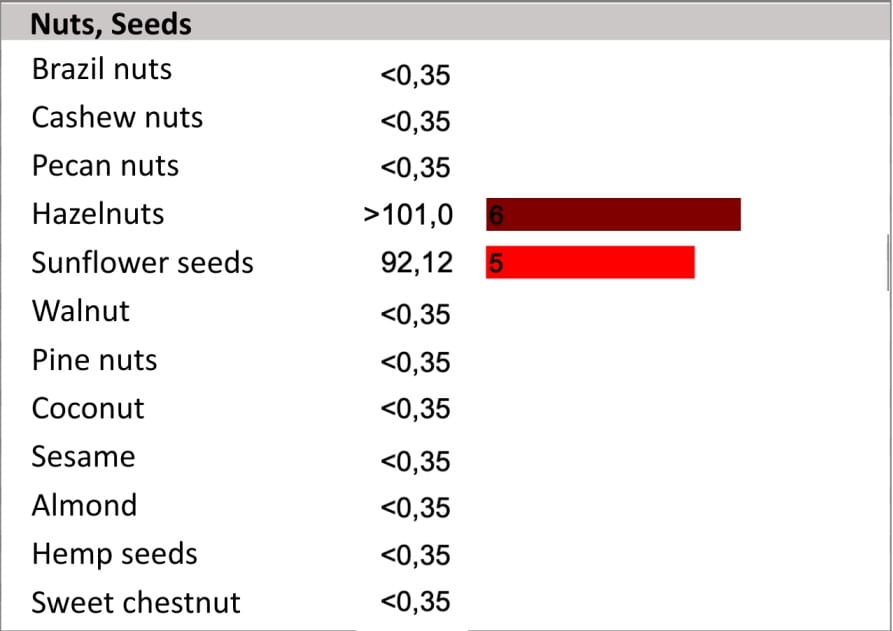
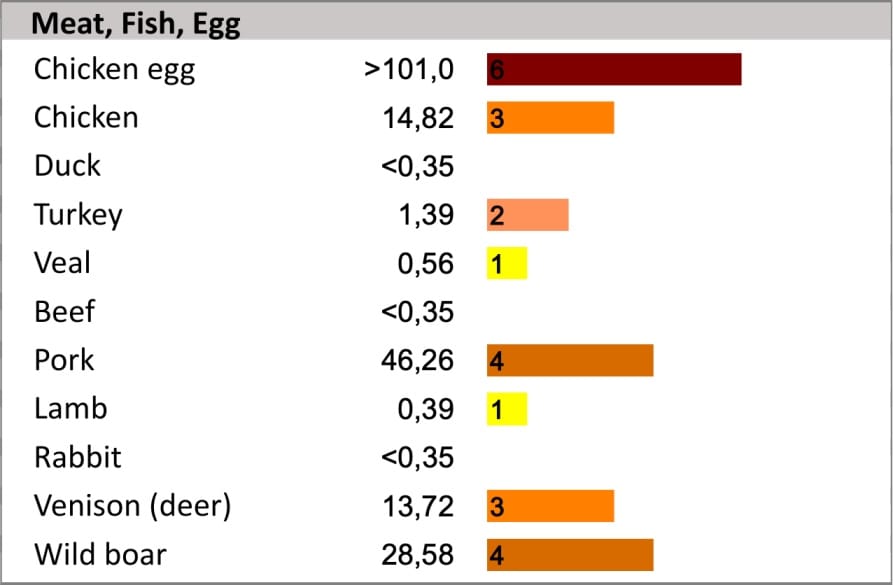
Albert always thought he tolerated eggs just fine, they were a regular part of his diet. But his test showed a strong immune reaction to chicken egg.
When he started paying closer attention, it clicked: every time he ate eggs, he got an unsettled belly, cramps and, soon after, a strong urge to go to the toilet. Something he had never linked to eggs, until he saw it in black and white.
The tricky part was that egg is hidden in a huge number of products. It took some detective work to find all the hidden places. But when he cut it out of his diet completely, something happened. The urgency disappeared, the belly pain eased, and for the first time in a long while his belly felt calm again.
Harry had never thought dairy would be a problem. He did not drink milk, but he did eat yoghurt, cheese and the occasional ice cream, nothing unusual.
His test showed a strong immune reaction to casein, a protein in dairy. Looking back, the signs were there: bloating after eating, a heavy belly and constantly low energy.
When he left out all dairy, the symptoms began to disappear. He had more energy and a belly that finally felt calm again.

Is an elimination diet a good idea? For some people, yes. It can help, but it is a lot of work. You have to follow a strict diet and then slowly, one by one, add foods back in to see whether your body reacts. You do not notice every reaction straight away.
Take Rosanne and her cappuccino. The first? No problem. The second? Belly pain and symptoms. Even when your body does not react loud and clear, something can still be happening. You might only notice it later through a bloated belly, cramps or loose stools. You might not feel it at all, but the reaction is still there. And it can get worse over time.
That is the power of testing. You get clear answers. You see exactly what triggers your immune system. And once you know that? Then you can take it into account and finally give your gut and immune system some rest.